Blog
Hybrid teams in IT: how to choose the ideal model for your company
In a market where digital transformation happens at a fast pace and needs change constantly, defining the ideal structure to lead IT projects has become a strategic decision. Among the options most adopted by companies is

In a market where digital transformation happens at a fast pace and needs change constantly, defining the ideal structure to lead IT projects has become a strategic decision. Among the options most adopted by companies are the formation of internal teams and the outsourcing of specialized services, and understanding the advantages and limitations of each model can make all the difference in your business performance.
In this article, we will demystify the main points about hybrid team models in information technology and present ways for you to choose the most effective solution aligned with your organization's reality.
Internal Team: when the team is in-house
Relying on professionals hired directly by the company is still the choice of many managers, especially when the project requires involvement with the internal culture and proximity to other departments.
Key benefits:
- Total control of operations: with the team under direct management, tracking deliveries and course correction are more agile.
- Higher engagement: a healthy corporate environment stimulates commitment to the organization's goals.
- Integration and collaboration: coexistence favors synergy between areas, strengthening teamwork.
Points of attention:
- High operational costs: maintaining a robust internal team requires continuous investments in salaries, benefits and structure.
- Low flexibility: fast adaptations can be difficult, especially in projects with variable scope or seasonality.
IT Outsourcing: agility with a focus on results
Opting to outsource technology projects with specialized partners is a strategic alternative for companies seeking scale, specialization and cost control.
Key benefits:
- High flexibility: it is possible to adapt the team and resources according to project phases or market changes.
- Financial efficiency: outsourcing allows optimizing the budget without being tied to fixed structures and internal salary policies.
- Access to specialists: specialized companies offer highly qualified professionals, with technical knowledge and business vision.
Challenges to consider:
- Integration with the internal team: physical and organizational distance may require greater alignment effort.
- Less direct control: activity management depends on clear agreements, performance indicators and efficient communication.
Hybrid teams: the ideal balance between control and agility
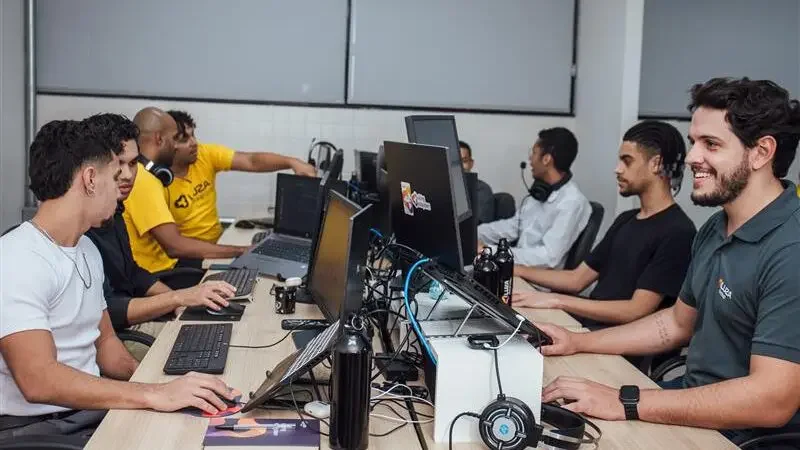
The truth is that many organizations are adopting hybrid models, joining the best of both worlds: a strategic internal team, supported by external specialists who ensure flexibility and scalability.
This approach allows:
- Respond quickly to changes
- Reduce operational costs
- Add technical knowledge on demand
- Maintain control over the business core
How LUZA can help
At LUZA Group, we have experience in connecting companies to the right solutions for their technology projects, whether through outsourcing, specialized consultancy or structuring hybrid teams. We operate with a focus on performance, delivery and total adherence to the needs of each business.
Need to understand which model makes more sense for your current situation?
Fale com um dos nossos especialistas e agende uma conversa.
Continue exploring.

The new engineering of the software-defined vehicle
Automotive engineering is undergoing a change that goes beyond electrification. Increasingly connected and software-dependent vehicles are bringing together areas that, for a long time, worked more independently.
Read article
Data quality in digital transformation
Automation, artificial intelligence, analytics, and systems integration have advanced rapidly within companies. Still, many digital transformation initiatives continue to face a less visible problem: the quality of the data that alim
Read article
Soft skills in the first 30 days of engineering projects
In engineering projects, it is still common to treat soft skills as a secondary differentiator. In practice, the first 30 days show the opposite. It is during this period that it becomes clear if the professional can transform technical knowledge into contribu
Read article

Does your company face a similar challenge?
Talk to our experts about the capabilities and delivery model best suited for your project.