
Blog
The new engineering of the software-defined vehicle
Automotive engineering is undergoing a change that goes beyond electrification. Increasingly connected and software-dependent vehicles are bringing together areas that, for a long time, worked more independently.
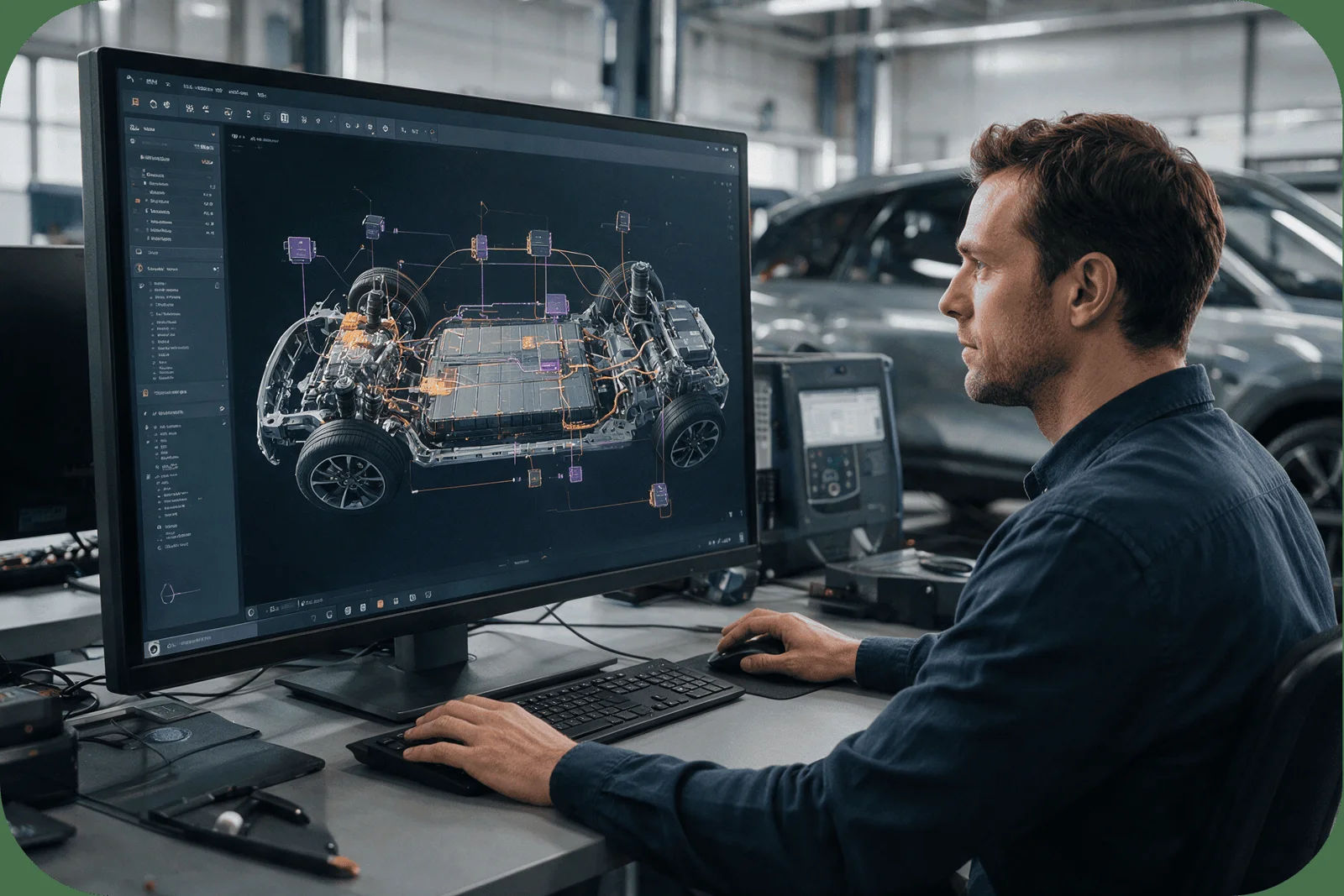
From mechanical engineering to the software-defined vehicle: how the automobile is changing engineering competencies
Automotive engineering is undergoing a change that goes beyond electrification. Increasingly connected and software-dependent vehicles are bringing together areas that, for a long time, worked more independently.
Mechanics, electronics, embedded systems, connectivity, and software now participate in the same set of decisions. This changes not only the product but also the skills required to develop it.
The vehicle has become more integrated
Brakes, steering, batteries, sensors, electronic units, driver assistance systems, and control software need to operate in a coordinated manner.
It is in this context that the concept of Software-Defined Vehicle grows, where more and more vehicle functions are controlled, updated, or optimized by software.
This does not reduce the importance of mechanical engineering; on the contrary. The challenge is precisely to make different disciplines function in an integrated manner.
A decision about a battery, for example, can involve structure, weight, thermal management, electronics, software, safety, and validation. Likewise, a change in a physical component can impact sensors, electronic controls, or other vehicle functions.
Specialization is essential, but working in isolation is not enough
This transformation does not mean that every engineer needs to master multiple areas at once. The specialist remains fundamental.
What gains importance is the ability to understand the interfaces between one's discipline and others. Multidisciplinarity does not mean being an expert in everything, but combining technical depth with the ability to dialogue with other areas.
A mechanical engineer does not need to become a software developer, for example. But understanding how certain decisions affect electronic or embedded systems can improve the quality of decisions made throughout the project.
Electrification expands the need for new competencies
In electric and hybrid vehicles, this integration becomes even more evident.
Established competencies in combustion engines, product development, manufacturing, and validation remain relevant, but they now coexist with knowledge related to batteries, electric motors, power electronics, control systems, embedded software, and connectivity.
For many professionals, this means incorporating new knowledge without abandoning the technical foundation built throughout their career.
Communication between systems also gains importance. Technologies like CAN, LIN, FlexRay, and Automotive Ethernet address different needs within the vehicle and are part of an increasingly complex architecture.
The challenge begins before the project
For companies, this transformation creates an additional issue: it is not enough to seek new skills once the project has already started.
Some knowledge can be found in the market, while others need to be developed internally. In many cases, it will be necessary to combine hiring, training, and support from external specialists.
Therefore, skills planning becomes part of engineering planning itself. The question is no longer just “how many people does this project require?” but also includes “what knowledge will be needed in the next stages?”
This anticipation is important because certain technical profiles are scarce and may not be available when the demand arises.
Automotive engineering continues to demand technical depth; what has changed is the context in which this specialization needs to operate. As the vehicle integrates more hardware, electronics, and software, the need for professionals and teams capable of understanding the connections between these areas also grows.
For companies, preparing for this change means developing competencies before they become a bottleneck for the next project.
Continue exploring.

Data quality in digital transformation
Automation, artificial intelligence, analytics, and systems integration have advanced rapidly within companies. Still, many digital transformation initiatives continue to face a less visible problem: the quality of the data that alim
Read article
Soft skills in the first 30 days of engineering projects
In engineering projects, it is still common to treat soft skills as a secondary differentiator. In practice, the first 30 days show the opposite. It is during this period that it becomes clear if the professional can transform technical knowledge into contribu
Read article
AI in processing plants: from reaction to prediction
AI in processing plants has become a strategic solution for operations that need to deal with the natural variability of ore, reduce reactive decisions, and improve operational efficiency in real time. In consulting, it is common to fin
Read article
Does your company face a similar challenge?
Talk to our experts about the capabilities and delivery model best suited for your project.