
Blog
AI-First Software Engineering: the new standard for competing at the pace of the market
Software engineering is changing structurally. More than new languages or methodologies, what is changing now is how technology is built. In the AI-first model, Artificial Intelligence stops being an "extra" and starts operating as pa
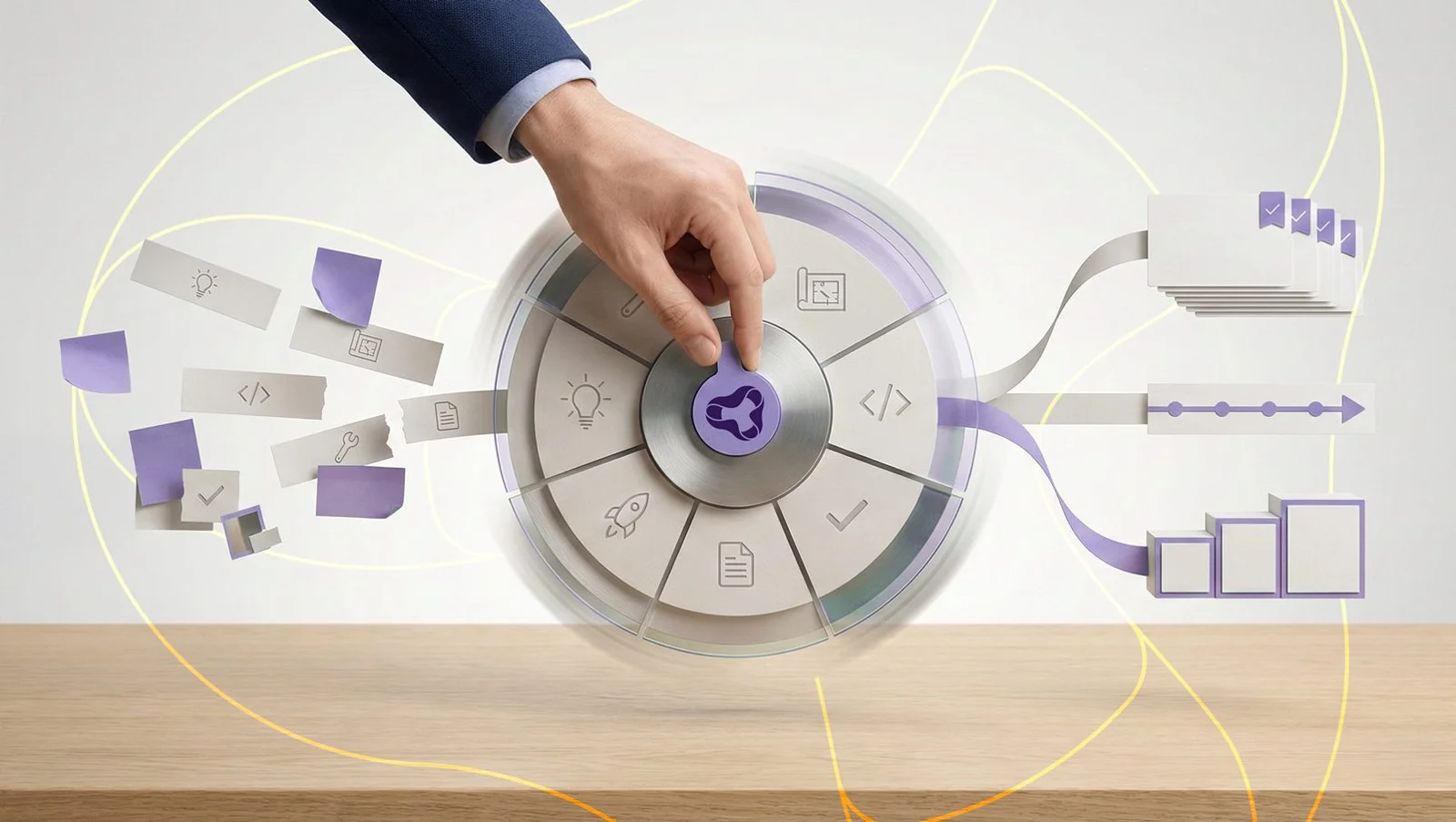
Software engineering is changing structurally. More than new languages or methodologies, what is changing now is how technology is built. In the AI-first model, Artificial Intelligence stops being an "extra" and starts operating as a central part of the development cycle.
In practice, companies that enter this model gain speed, quality, and scale. Those that maintain the traditional flow tend to lose pace because the market shortens deadlines, increases complexity, and demands predictability.
What is AI-first development
Being AI-first means integrating AI into the entire software cycle, end-to-end. That is, AI enters the process from the beginning and accompanies delivery through to continuous evolution:
- Conception: AI helps transform problems into requirements and solution options, anticipating risks and architectural trade-offs.
- Code writing: AI accelerates implementation by suggesting snippets, patterns, and refactorings aligned with the project context.
- Testing: AI generates test cases and edge cases, increasing coverage and reducing failures that would escape manual reviews.
- Documentation: AI keeps documentation alive based on code and changes, reducing the "lag" between what was done and what is recorded.
- Maintenance and evolution: AI supports continuous corrections and improvements by identifying weak points, critical dependencies, and simplification opportunities.
In short, AI-first is a process, not just a tool. Therefore, AI enters as part of the standard flow, not as an occasional use.
Copilots and expanded productivity
Copilot tools have already changed the team's daily work. In general, they act on high-repetition and high-volume tasks:
- Code suggestion: accelerates implementation by reducing "boilerplate" time and pattern searching.
- Review and refactoring: improves readability and consistency by pointing out style adjustments, duplication, and unnecessary complexity.
- Continuous documentation: reduces friction by generating descriptions and examples from what was actually implemented.
Thus, the result appears in the team's behavior:
- Less time on operational tasks: reduces repetitive activities (boilerplate code, simple adjustments, basic review) and frees up team energy.
- More focus on solution and architecture: directs effort toward design decisions, integration, and technical trade-offs that impact product and scale.
- Higher team productivity: increases capacity with fewer bottlenecks, maintaining quality and accelerating delivery cycles.
As an effect, the developer leaves "executor" mode and starts acting more as a solutions engineer, with time to think about the system.
Testing and documentation are no longer bottlenecks
Testing and documentation historically slow down speed, not for lack of importance, but due to cost and effort. With AI, part of that cost falls.
In practice, the direct impacts are:
- Higher quality: increases the chance of detecting errors early by expanding coverage and standardizing validations.
- Less rework: reduces late corrections by preventing problems from moving to staging or production.
- Faster releases: shortens the time between development and implementation by automating part of the technical "closing".
- Reduction of operational risks: improves traceability and predictability by keeping tests and documentation aligned with the real state of the system.
Smaller and more efficient squads
The AI-first model tends to enable leaner squads without losing delivery capacity. This happens because part of the "groundwork" is automated.
- AI takes over operational tasks: reduces the load of repetitive activities that consume engineering hours without increasing proportional value.
- Professionals focus effort on decisions: prioritizes architecture, integration, security, and technical governance, where human judgment carries more weight.
- Delivery pace becomes more predictable: improves planning by reducing variation caused by mechanical tasks and internal queues.
In other words, it is not about replacing people. It is about raising the level of human work.
Accelerated legacy modernization
One of the most relevant gains appears in modernization. After all, legacy systems often stall evolution due to risk, lack of documentation, and invisible dependencies.
- Old system analysis: accelerates understanding by mapping dependencies, flows, and critical points based on code and logs.
- Legacy documentation: reduces risk by creating a quick reference for decisions, maintenance, and migration.
- Assisted refactoring and migration: reduces cost by supporting incremental rewriting and technical validation in smaller parts.
This unlocks companies that were previously stuck with outdated technology, not by choice, but due to the cost of change.
The strategic message for companies
AI-first engineering is already being adopted by digital companies, banks, and industries with high software dependency. Therefore, the consequence is clear: those who do not modernize their IT will not keep up with the market pace.
Organizations that adopt this model:
- Launch products faster: shorten cycles by automating stages that were previously bottlenecks in the pipeline.
- Reduce costs: decrease rework and improve productivity without necessarily increasing headcount at the same pace.
- Innovate more easily: free up the team to explore solutions and test hypotheses with lower operational cost.
- Scales technology safely: strengthens quality and governance by standardizing testing, documentation, and review.
In contrast, traditional models tend to suffer from:
- Long cycles: deliveries take longer because they depend on manual steps and internal queues.
- High maintenance cost: legacy systems consume capacity and become a recurring technical tax.
- Loss of competitiveness: the company responds more slowly to the market, customers, and competition.
The role of leadership
The change is not just technical, it is cultural and managerial. Without leadership, AI becomes an "isolated initiative" and does not change the result.
What needs to happen:
- Process review: adjusts the flow so that AI enters as a work standard (not as an exception).
- Team training: ensures consistent and safe use, avoiding “blind dependence” and fragile practices.
- New productivity metrics: measures delivered value and cycle quality, not just volume of commits or hours.
- Modernization investment: reduces the legacy weight so AI can truly accelerate what matters.
Therefore, AI becomes part of the engineering strategy, not just a tool for the "technical team".
Conclusion
AI-first engineering redefines software development. In other words, copilots, test automation, intelligent documentation, lean squads, and accelerated modernization stop being a differentiator and become the standard.
The question is no longer whether companies will adopt this model, but when, because competing becomes dependent on combining people, data, and artificial intelligence with method and governance.
Today, what hinders your engineering most from operating in AI-first: process, culture, security, or legacy?
Continue exploring.
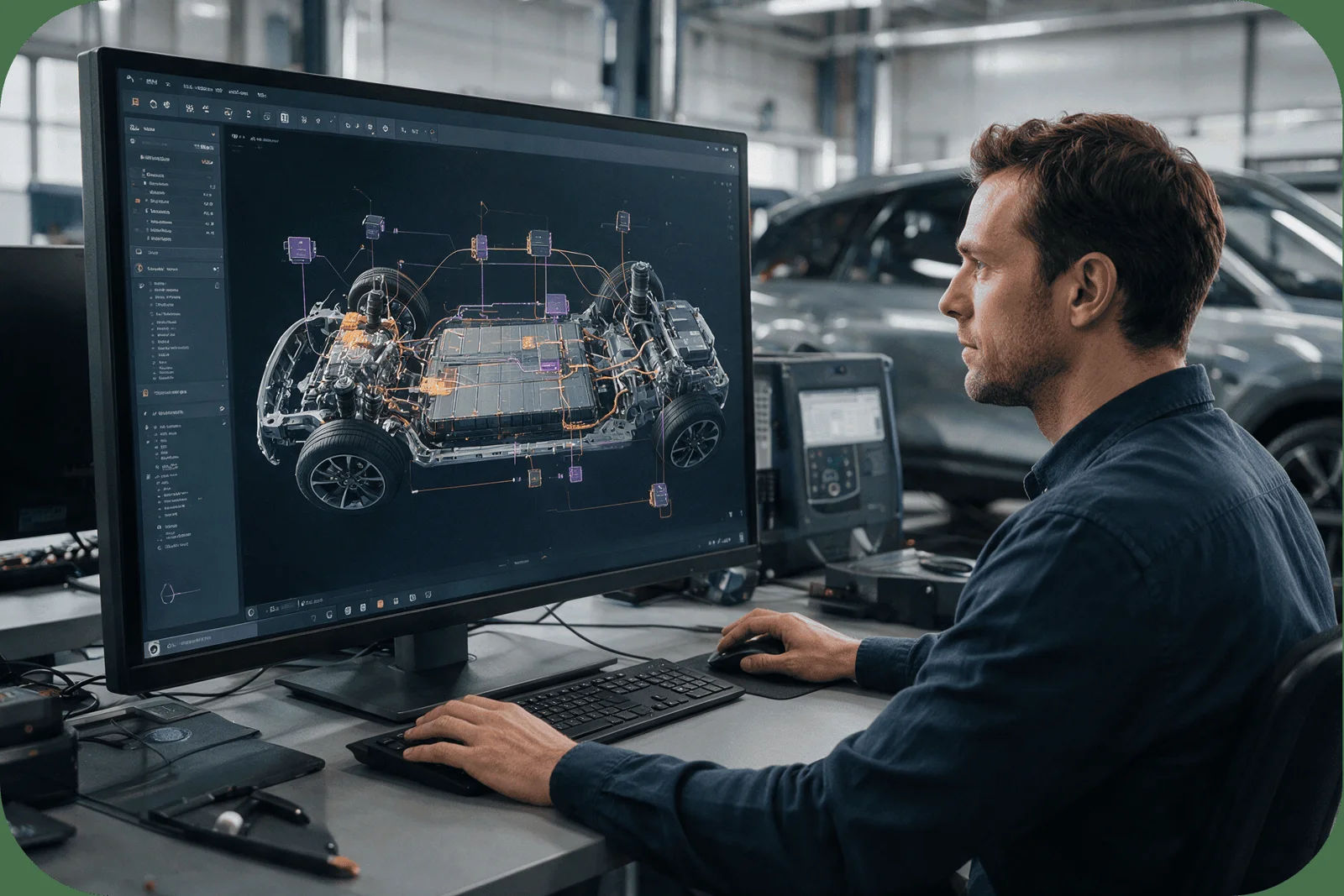
The new engineering of the software-defined vehicle
Automotive engineering is undergoing a change that goes beyond electrification. Increasingly connected and software-dependent vehicles are bringing together areas that, for a long time, worked more independently.
Read article
Data quality in digital transformation
Automation, artificial intelligence, analytics, and systems integration have advanced rapidly within companies. Still, many digital transformation initiatives continue to face a less visible problem: the quality of the data that alim
Read article
Soft skills in the first 30 days of engineering projects
In engineering projects, it is still common to treat soft skills as a secondary differentiator. In practice, the first 30 days show the opposite. It is during this period that it becomes clear if the professional can transform technical knowledge into contribu
Read article
Does your company face a similar challenge?
Talk to our experts about the capabilities and delivery model best suited for your project.