
Blog
ADAS: What it is and the challenges of the technology that is transforming vehicle safety
In an increasingly technological scenario, vehicle safety evolves far beyond the seat belt and the airbag.
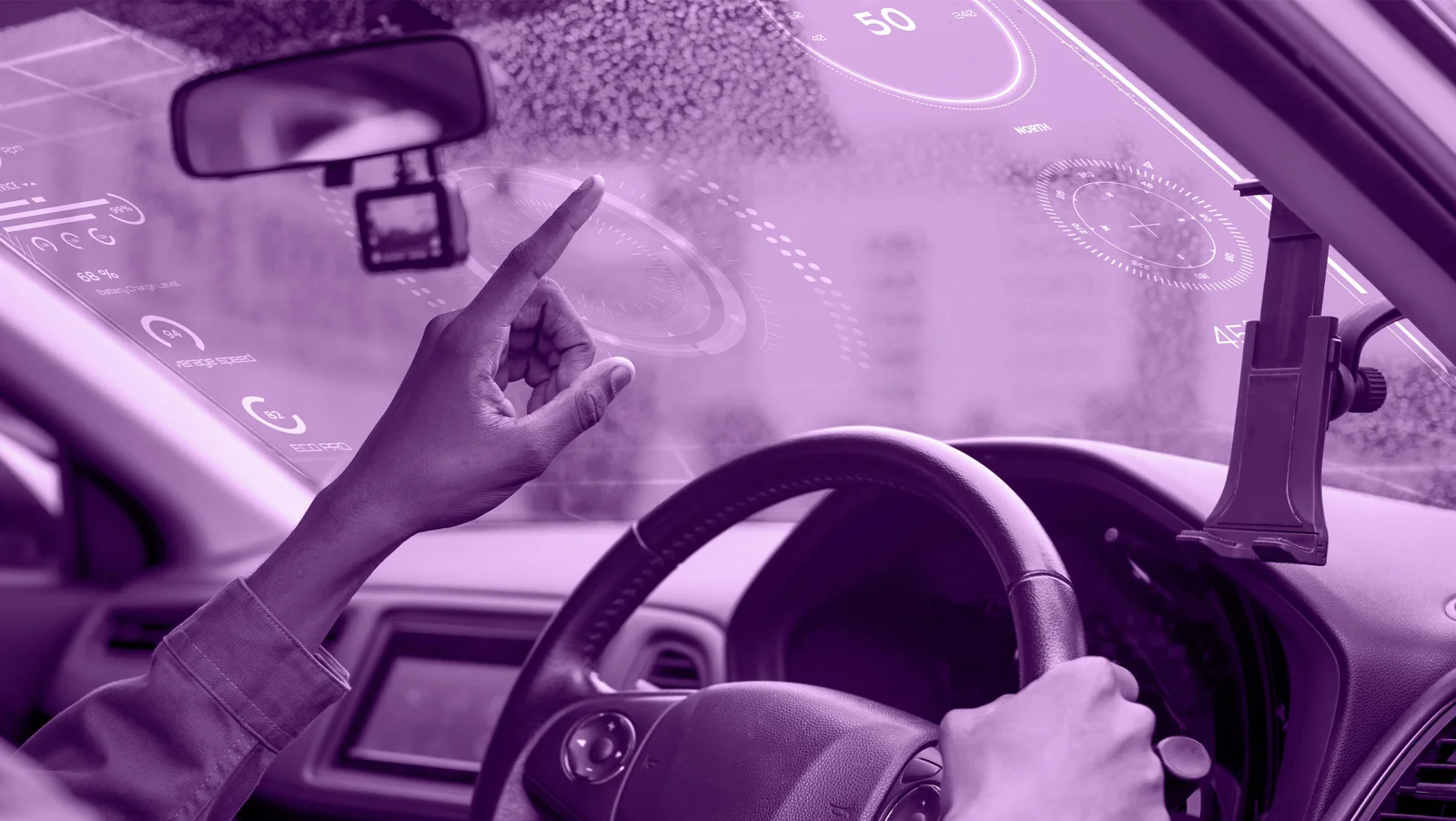
In an increasingly technological scenario, vehicle safety evolves far beyond the seat belt and the airbag.
Advanced Driver-Assistance Systems, known as ADAS, are revolutionizing the way we drive by combining intelligent sensors, artificial intelligence, and automation. But how do these systems work, what are their levels and challenges, and how to ensure they operate with maximum efficiency? LUZA Group explains.
What is ADAS?
The Advanced Driver-Assistance System, known as ADAS, is a system that uses sensors and cameras in vehicles to offer more comfort and safety during driving. It prevents collisions, being able to alert drivers and even act in cases of an accident, in addition to assisting in routine operations such as:
- Parking assistance;
- Pedestrian detection;
- Lane departure warning;
- Blind spot detection.
How does the ADAS system work?
Depending on the configuration and level of automation, sensors installed in the vehicle (cameras, radars, ultrasound, GPS, etc.) can capture information about the surroundings, such as the speed and distance of other cars, the presence of pedestrians and cyclists, lane markings, traffic signs, weather and lighting conditions, and fixed objects.
The information collected by the sensors is sent to an Electronic Control Unit (ECU), where it is processed by algorithms that analyze the data and identify potential risks. Based on the data analysis, the ADAS system can alert the driver through visual warnings (on the car dashboard) or audible ones in case of imminent danger, such as a vehicle too close, or intervene automatically to avoid an accident. In these cases, the System can apply the brakes to reduce the vehicle's speed or adjust its steering to stay in the lane.
Types of ADAS
There are several types of ADAS, and each one has a specific functionality:
- BIS (Blind Spot Information System) : it is like an "extra look" for the driver, it warns about the presence of vehicles in blind spots, using warning lights on the external rearview mirrors to avoid surprises during lane changes.
- PWC (Pedestrian Warning and Collision) : focuses on pedestrian safety. By detecting the presence of pedestrians on the road, it issues alerts to the driver and, in critical situations, can even activate the brakes to avoid collisions.
- BAS (Brake Assist System) : Identifies emergency braking situations and offers additional assistance to maximize brake effectiveness, providing a faster and more efficient response.
- ACC (Adaptive Cruise Control) : it is like an “adaptive cruise control”. It automatically adjusts the car's speed based on the distance from the vehicle ahead, maintaining a constant and safe speed, especially in traffic.
- LKS (Lane Keeping System) :is the “lane guardian”. It continuously monitors the vehicle's position in the road lanes, issuing alerts or correcting the trajectory if the car starts to leave the track without proper signaling
- RCA (Rear Collision Avoidance) : focuses on rear safety. Its function is, basically, to detect objects approaching the rear of the vehicle and issue an alert to the driver.
ADAS Levels
The system levels are represented on a scale ranging from 0 to 5, where zero represents the absence of automated assistance and 5 represents complete vehicle autonomy:
- Level 0: The vehicle has no automated assistance. All functions are fully controlled by the driver.
- Level 1: The vehicle features a single automated function, taking the first step toward automation.
- Level 2: The vehicle has the ability to perform two automated functions simultaneously, thus providing more assisted driving.
- Level 3: The vehicle can use various automated assistance systems and artificial intelligence to make decisions. All this based on the situation around it and without the need for human supervision.
- Level 4: The vehicle reaches a more advanced level, being capable of operating fully automated under certain conditions. Furthermore, the driver can leave all steering work to the technology, respecting rules and limitations.
- Level 5: The vehicle is fully autonomous, requiring no human intervention. This is the stage where technology reaches the peak of automation, providing a completely independent driving experience, where the only human intervention is the choice of destination.
Challenges of ADAS implementation
Although Advanced Driver-Assistance Systems are revolutionizing vehicle safety, their implementation still faces significant technical and operational challenges.
One of the main obstacles is the need for extremely precise calibration of sensors, such as cameras, radars, and ultrasonic sensors. Any misalignment, however small, can compromise the environment reading and generate failures in the system's operation.
In addition, there is the complexity of integrating these systems with different vehicle electronic platforms, especially in manufacturers that use diverse architectures. This lack of standardization can hinder updates, maintenance, and even interoperability between modules.
Another critical point involves variations in environmental conditions: heavy rain, fog, snow, dirt on cameras, or poor lighting can impair sensor function and affect the system's response capacity in real time.
These challenges reinforce the importance of rigorous testing, specialized maintenance, and continuous advancements in automotive software and hardware engineering to ensure that ADAS performs reliably in all situations.
How Luza can solve these problems
At LUZA Group, we view the complexity of Advanced Driver-Assistance Systems (ADAS) as an opportunity to evolve. We know that the technological transformation in mobility requires precision, adaptability, and applied intelligence.
We combine our expertise in automotive engineering, computer vision, and artificial intelligence to develop customized solutions. We operate across the entire ADAS systems cycle, from calibration to validation and maintenance, focusing on performance and compliance with the highest industry standards.
Our projects are guided by data, rigorous testing, and agile methodologies. We apply innovation with criteria, ensuring that each system operates with maximum efficiency and responds accurately to real driving situations.
More than just implementing technology, we ensure its excellence in operation. With robust solutions tailored to each client's reality, we deliver safer, smarter vehicles prepared for global mobility challenges.
Speak with our specialists
Do you want to understand how ADAS systems can increase the safety and efficiency of your automotive operation?
Continue exploring.
The new engineering of the software-defined vehicle
Automotive engineering is undergoing a change that goes beyond electrification. Increasingly connected and software-dependent vehicles are bringing together areas that, for a long time, worked more independently.
Read article
Data quality in digital transformation
Automation, artificial intelligence, analytics, and systems integration have advanced rapidly within companies. Still, many digital transformation initiatives continue to face a less visible problem: the quality of the data that alim
Read article
Soft skills in the first 30 days of engineering projects
In engineering projects, it is still common to treat soft skills as a secondary differentiator. In practice, the first 30 days show the opposite. It is during this period that it becomes clear if the professional can transform technical knowledge into contribu
Read article

Does your company face a similar challenge?
Talk to our experts about the capabilities and delivery model best suited for your project.